
Dashboard Warning Light Check Before Buying: 4 Steps to Spot a Hidden Light
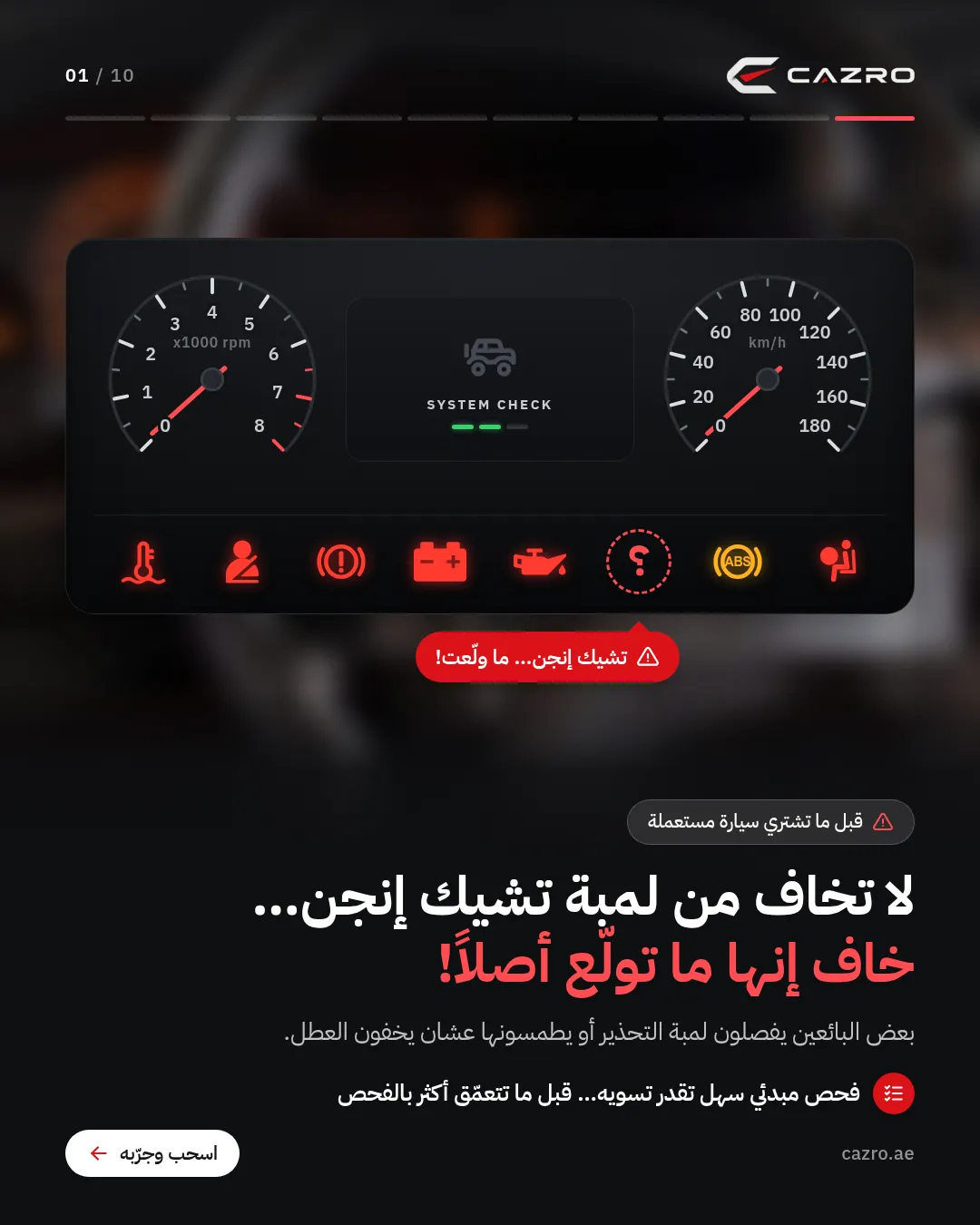
Don't fear the check-engine light — fear it never coming on. Some sellers disconnect or black out a warning light to hide a fault, so the dashboard looks clean. Here's an easy first check you can do yourself before a deeper inspection.
Photos from the real inspection

Swipe to see more photos
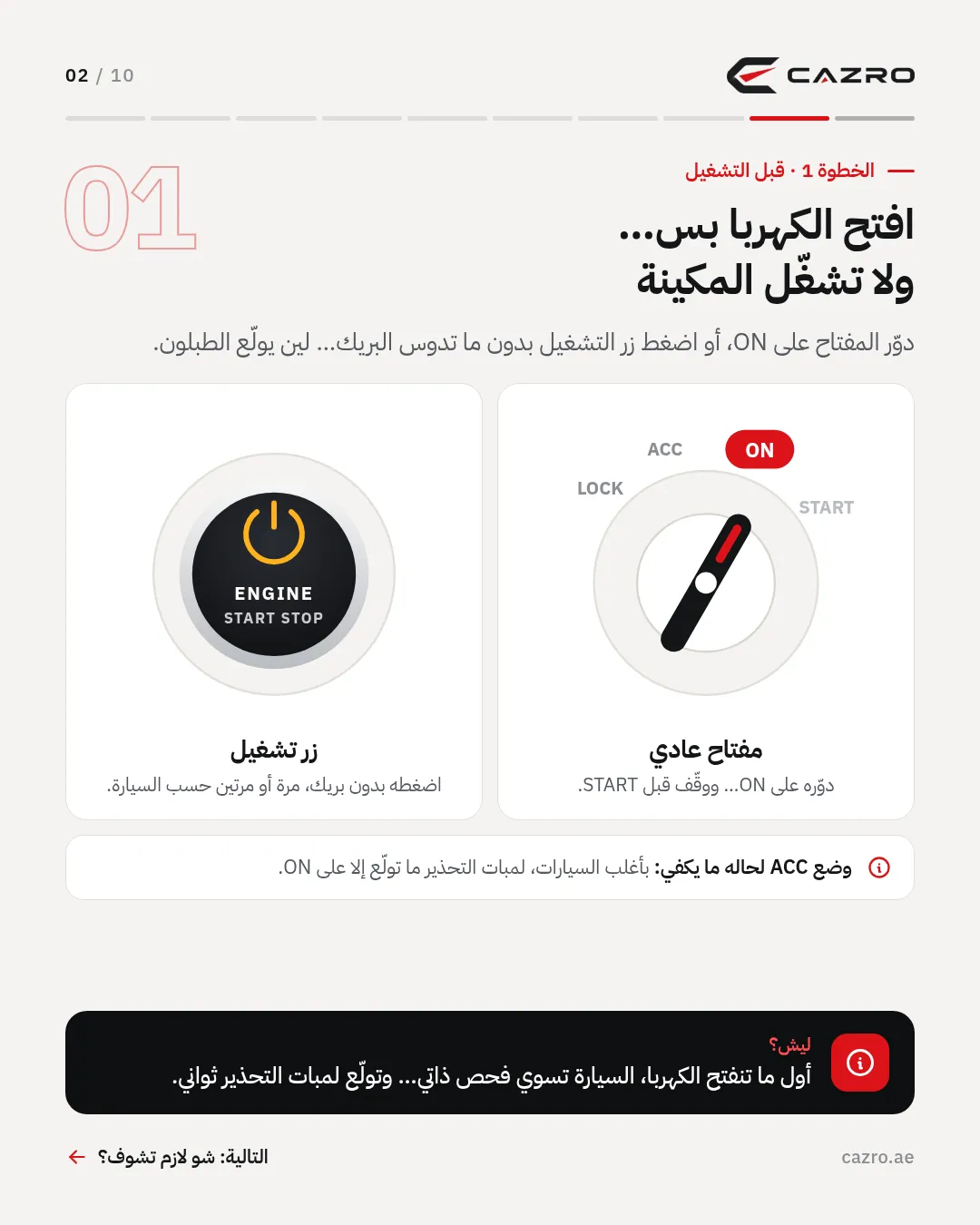
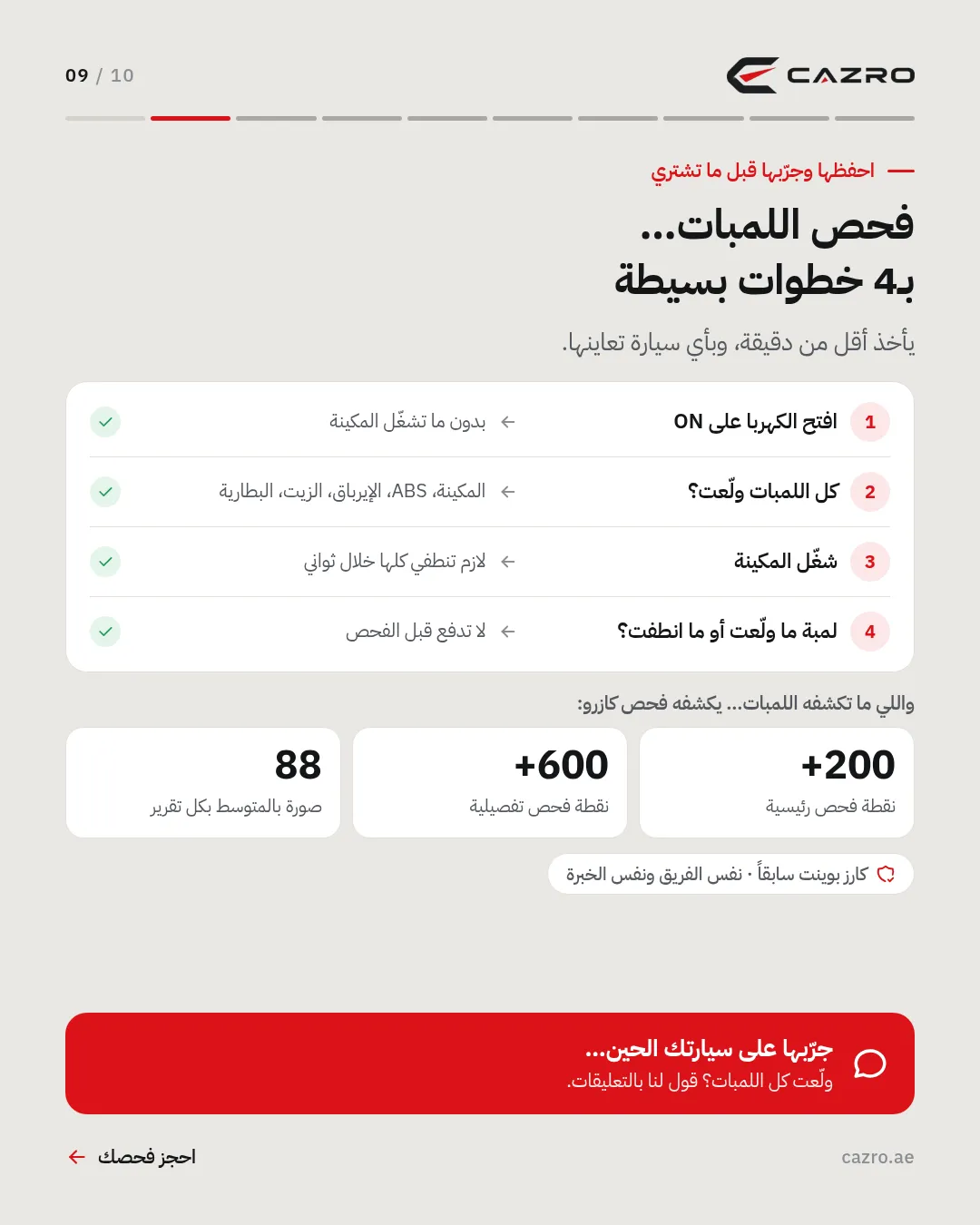
Step 1: switch the ignition on — don't start the engine
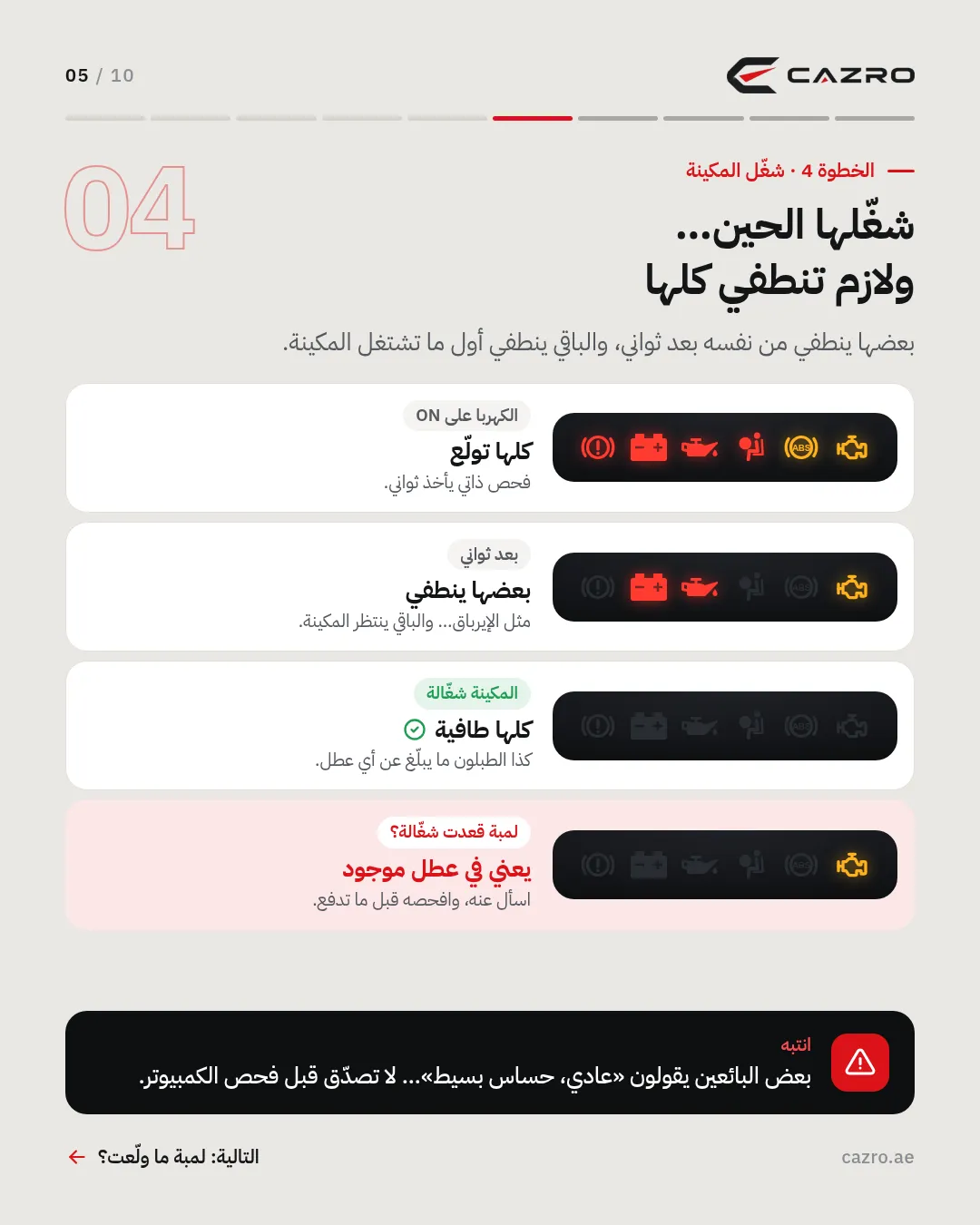
With a key, turn to ON and stop before START. With a push button, press it without the brake, once or twice depending on the car. ACC alone isn't enough. As soon as power is on, the car runs a self-test and lights the warning lamps for a few seconds.
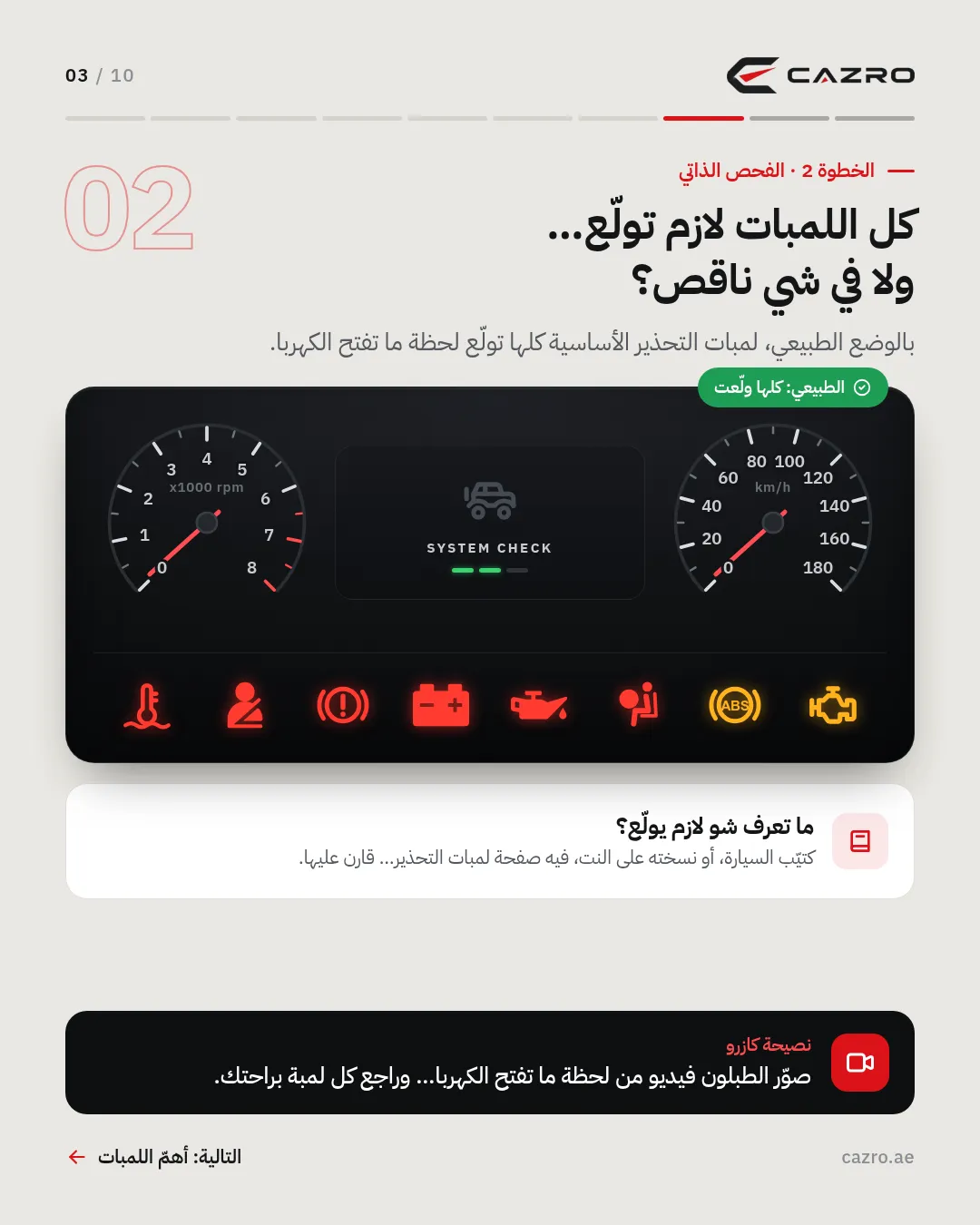
Step 2: every light should come on
Normally all key warning lights come on as soon as power is on. Compare against the warning-light page in the owner's manual, and film the cluster from the first second so you can review each light.
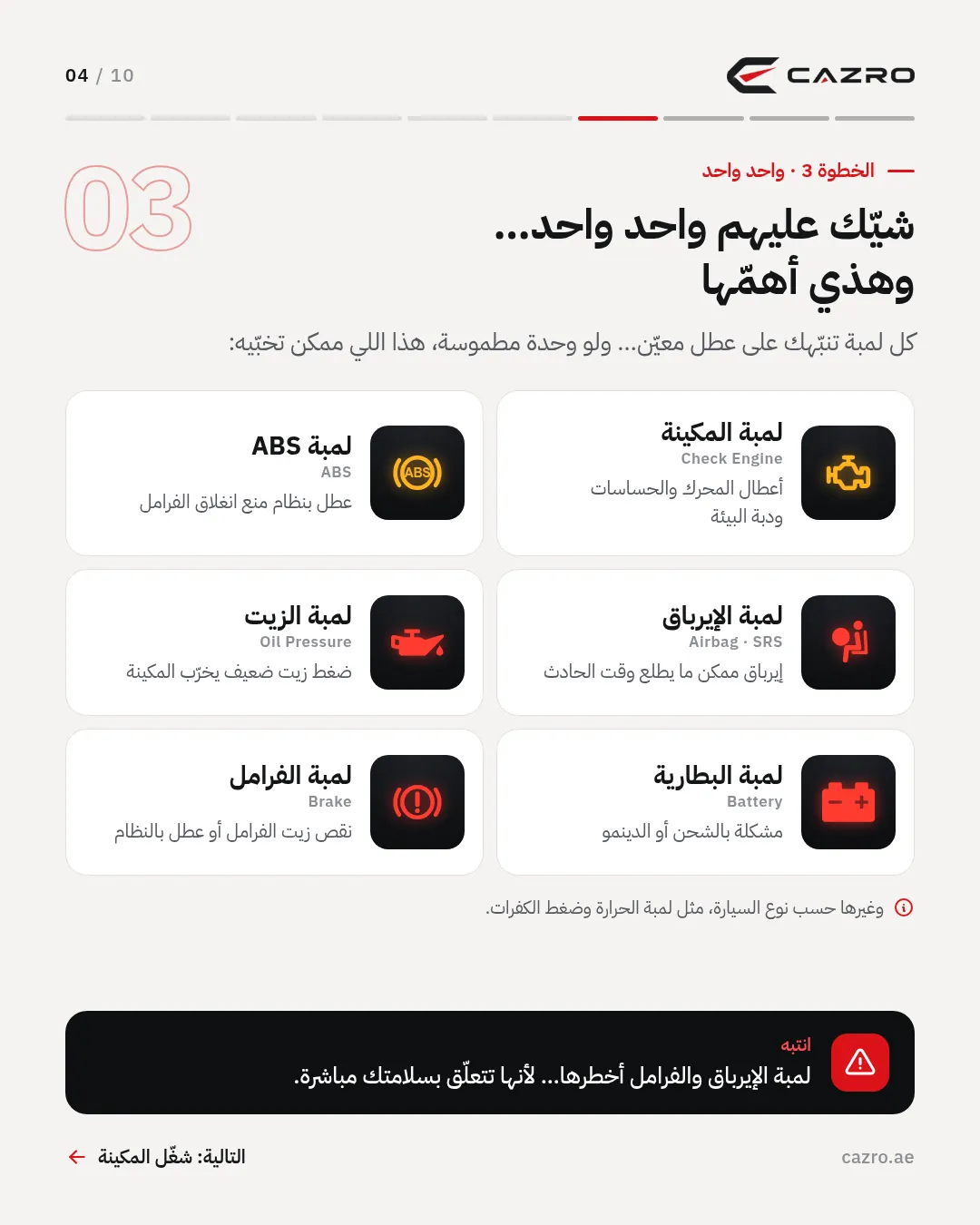
Step 3: check them one by one
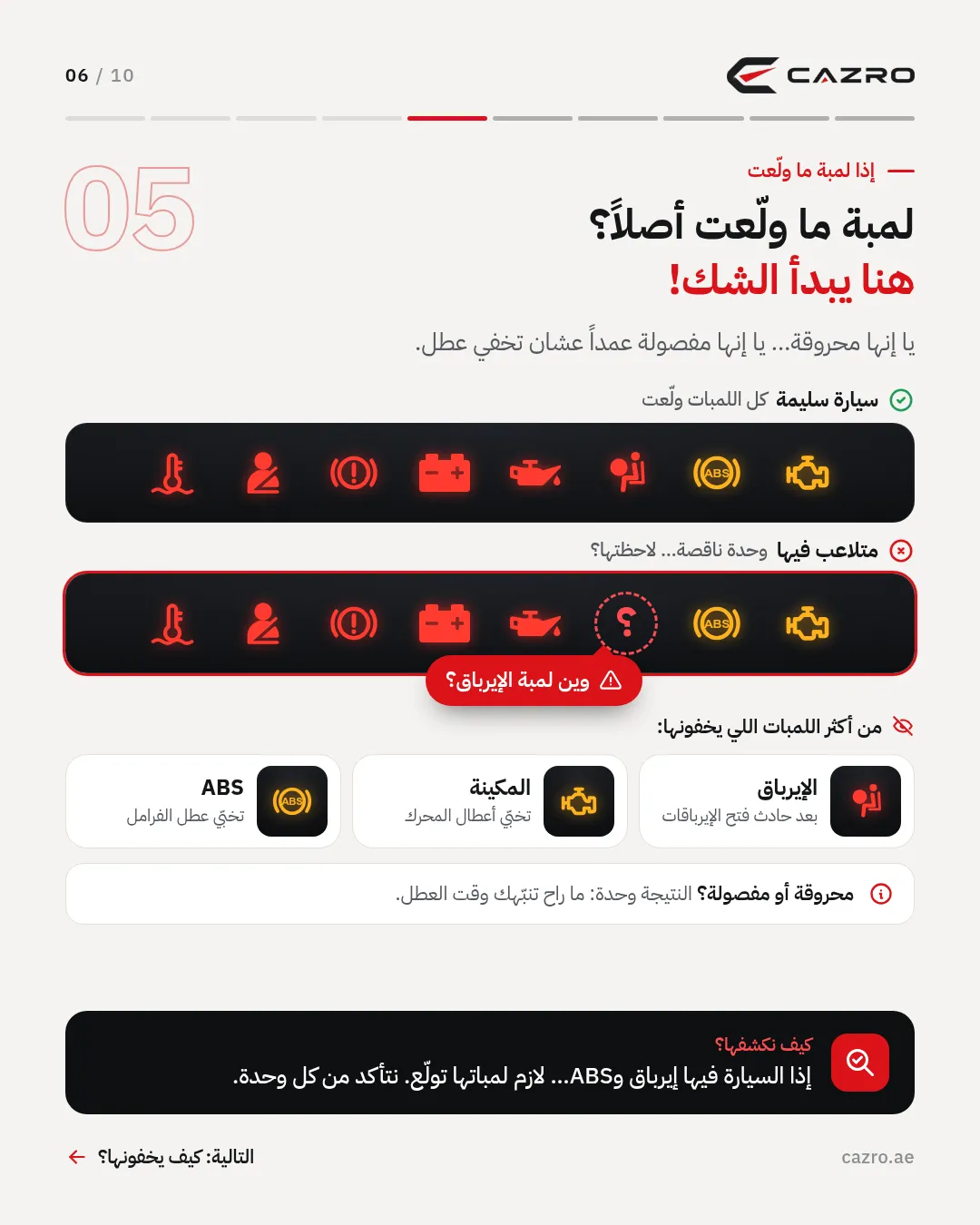
Airbag and brake lights matter most because they affect your safety.
- Engine: engine, sensor and catalytic converter faults
- ABS: anti-lock braking fault
- Airbag: an airbag that may not deploy in a crash
- Oil: low oil pressure that damages the engine
- Battery: charging or alternator problem
- Brakes: low brake fluid or a system fault
Step 4: start the engine — they should all go off
After starting, all lights should go out within seconds. A light that stays on means a real fault — ask about it and get it checked before paying; don't accept "it's just a small sensor" without a computer scan.
A light that never came on? Be suspicious
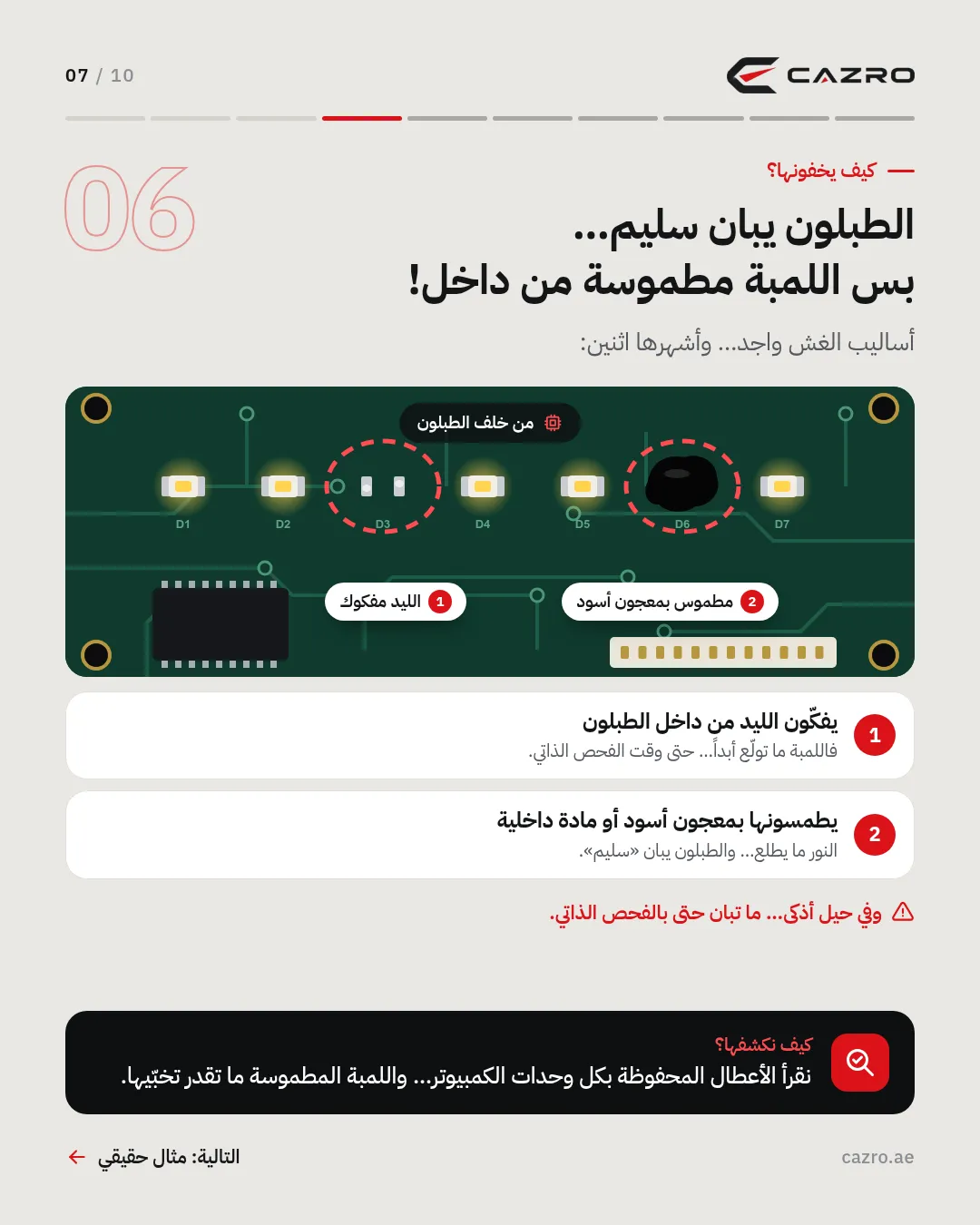
Either it's blown or it was deliberately disconnected to hide a fault. Common methods: removing the LED inside the cluster or blacking it out with dark paste. The most-hidden lights are airbag, engine and ABS.
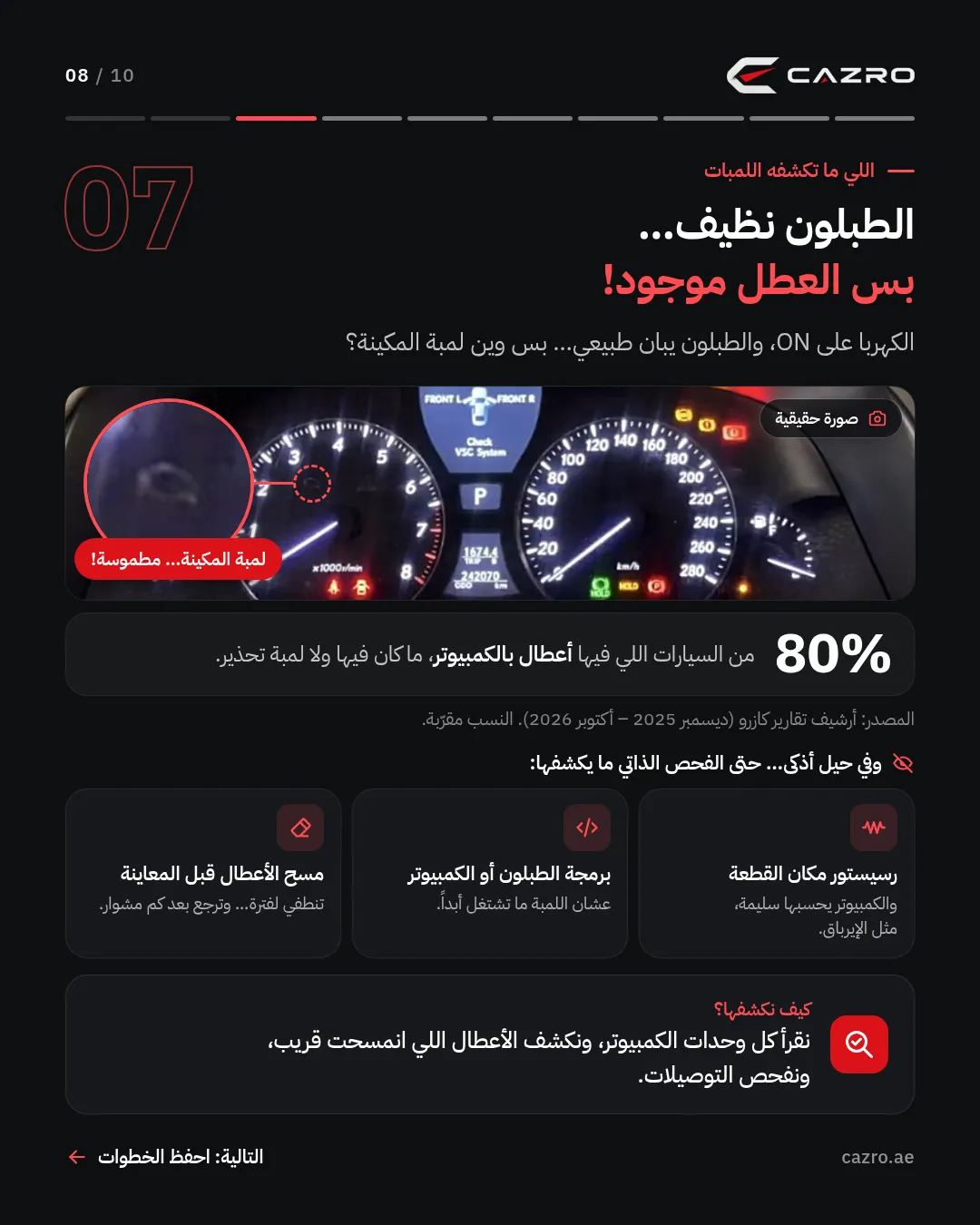
Smarter tricks the self-test won't catch
From Cazro reports: 80% of cars with computer faults showed no warning light. That's why we read every control module, detect recently cleared faults and check the wiring.
- A resistor in place of a part, so the computer reads it as fine
- Cluster or module programmed so the light never shows
- Faults cleared before viewing — they return after a few drives
Book a pre-purchase inspection
What the lights won't tell you, a Cazro inspection will: 200+ main and 600+ detailed inspection points.
Frequently asked questions
If all lights are off with the engine running, is the car fine?
Not necessarily. Make sure they lit up at power-on — and even then some tricks only show in a computer scan.